


IT’S AN UPHILL GRIND
Contributed by Caine Warburton
IT’S SAFE TO SAY THAT TRAIL RUNNING AND HILLS GO HAND IN HAND LIKE INSTAGRAM AND HASHTAGS, LONG RUNS AND CHAFE OR TRAIL SHOES AND MUD.
If you want to experience the most beautiful trails and stunning vistas then chances are you are going to have to negotiate some serious hills along the way. However running hills doesn’t always have to be a grind.
With a few tweaks to your technique and some training, you too can be floating uphills like Kilian Jornet…well, sort of anyway!
Body Position
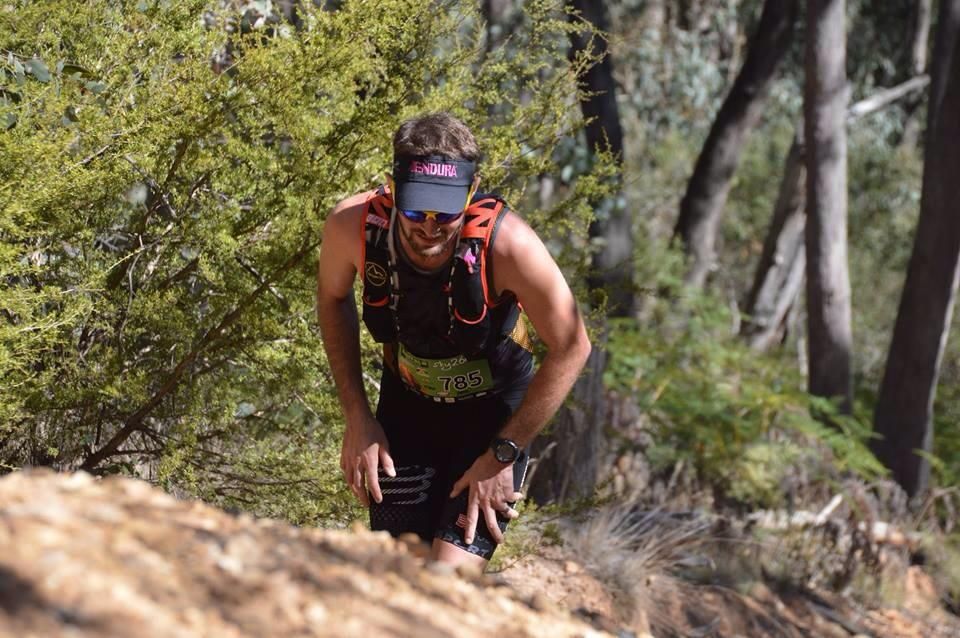
Have you ever seen someone with their head down, bum sticking out, sucking in the big ones on a climb? Well, that’s what not to do. Ideally, you want to lean forward slightly from the ankles keeping a straight line between your shoulders and calves. Keep your head up and avoid looking directly down at your feet. A vision point 1 to 1.5-metres ahead (slightly more if a less steep climb) is best.
Knee Lift
Depending on the hill grade and duration, the ideal knee lift will change. For less steep or short hills (ones you can power up) aim for a high knee lift to generate maximum power. For longer climbs, aim for a small or short knee lift to conserve energy. Generate power from the plyometric forces created through the calves and feet.
Foot Strike
Less heel is ideal. As with most styles of running, a midfoot or forefoot strike is the goal and the steeper the hill, the more you should tend towards forefoot striking. That will allow you to generate those plyometric powers (rebound) through the plantar fascia, achilles and soleus muscles. Additionally, a forefoot strike will minimise your footprint on the ground, helping you negotiate technical trails easier as there will be less pronation/supination (rolling in or out of the foot) during your stride.
Stride Length
As with knee lifts, the ideal stride length will be dictated by the grade, duration and technicality of the hill. A shorter or less steep hill will allow you to use a longer stride in conjunction with a high knee lift, and this will allow you to move up the hill faster, but consequently use a lot of energy. However steep, technical or long, hills require a shorter stride length to conserve energy or negotiate technical sections better.
Hiking v Running
It’s always a contentious point when to switch from running to hiking during a climb. The idea of power hiking is to continue moving as fast as possible uphill while conserving energy and resting the motor patterns used for running. With that in mind, switch from running to hiking when you feel you are using too much energy running for the speed you are generating. At this point, chuck your hands on your knees and power hike the hell out of the climb until you can run again.
How to Train for Hills
There are more than 100 ways to skin a cat, but when it comes to hills, there’s just one to improve – run more hills! To introduce hill sessions to your training plan, first start by adding in one easy pace, hilly run where you focus on just running up and down a series of hills. From here, you can start adding vertical ascent to your long runs and practise hiking when you need to. Lastly, the most effective way to become faster uphill is to conduct hill repetitions/intervals. Start with a 10 to 15 minute warm up, then conduct a series of timed uphill efforts where you run hard, and then focus on form before jogging or walking easily back down to the bottom. Good examples of these are:
– 6 x 3 min hard uphill
– 5 x 5 min hard uphill
– 5 min, 4 min, 3 min, 2 min, 1 min efforts
Remember to always cool down after a session like this with 10 to 15 minutes of easy running.
So next time you are out searching for that vert, or hurting on the hills, give the above tips a go and see how much difference they can make for you. Who knows? There may be a little Kilian Jornet inside all of us!
Happy running!
Pictured: Caine Warburton takes a steep climb at the Buffalo Stampede Ultra.
Caine Warburton ran his first race in the mountains back in 2009, and the following year completed his first ultra marathon with his wife. Now living on the Gold Coast, Caine utilises the mountains, hills and trails daily to improve his performance, and is partnered with Team Salomon, Suunto, and Compressport.


share this
IN OTHER NEWS
