

Coach’s Corner with Pete Colagiuri: 4 most common ultra injuries & how to train around them

Coach’s Corner with Pete Colagiuri: 4 most common ultra injuries & how to train around them
Kate Dzienis • February 26, 2022

Peter Colagiuri is a Sports Physiotherapist, Level 3 Running Coach and ultra runner. He works clinically at Bioathletic in Sydney and is developing the first mobile app (https://injury.app) to diagnose running injuries and prescribe rehab programs.

For an ultra runner, it’s handy to know the most common injuries that are likely to disrupt your training. You can take pre-emptive steps to minimise your risk of each one and be proactive at the first sign of a niggle.

But occasionally the injury builds despite your best efforts and you can’t just ‘run it out’.

If you keep training the same as always, it’s quite likely that the injury will continue to get worse. But if you stop, you’ll lose all those performance improvements and make yourself more prone to injuries during your rebuilding phase (if you want to read more about why rest for injuries can be one of the worst approaches to take, this post explains it well.)

So if you can’t continue as normal but you can’t stop, what’s the plan?

Your ideal scenario is one where you can continue to run with modified sessions that don’t aggravate your injury, while conducting your rehab to help the injury recover.

Each injury is susceptible to different types of loading. The trick to successfully training through the injury is to choose sessions with the type of loading that will benefit (or at least, not worsen) the pathology.

One big note though – if your injury has you concerned, if it affects your running technique or if it’s worsening despite modifying your training, go seek a professional opinion. Consider it a small investment to avoid wasting all your good training to date with a prolonged injury break.

Achilles Tendinopathy

It might sound like every ultra runner has had Achilles issues at one stage or another. That’s because it affects up to 1 in 5 ultra runners each year (and 1 in 10 ‘normal’ runners) and is one of the most common running injuries. For some context, sprained ankles affect about 1 in 20 ultra runners each year.

Achilles tendinopathies actually need loading to recover, and more consistent loading gets a better result than taking rest days. While rest might avoid the pain, the pathology inside the tendon remains unchanged and fires up again quickly when you start running again.

Modify your training to run more often in the week but with less daily volume. For example, if you previously ran 3 days x 12km each week, switch to 6 x 6km instead.

Achilles issues also don’t like rapid or strong loading, so avoid speed sessions and hills. In place of hills, you can hit the stairs as the flatter surface of the step reduces the stretch on the Achilles (although you’ll still need to back off on the intensity).

Patellofemoral Pain

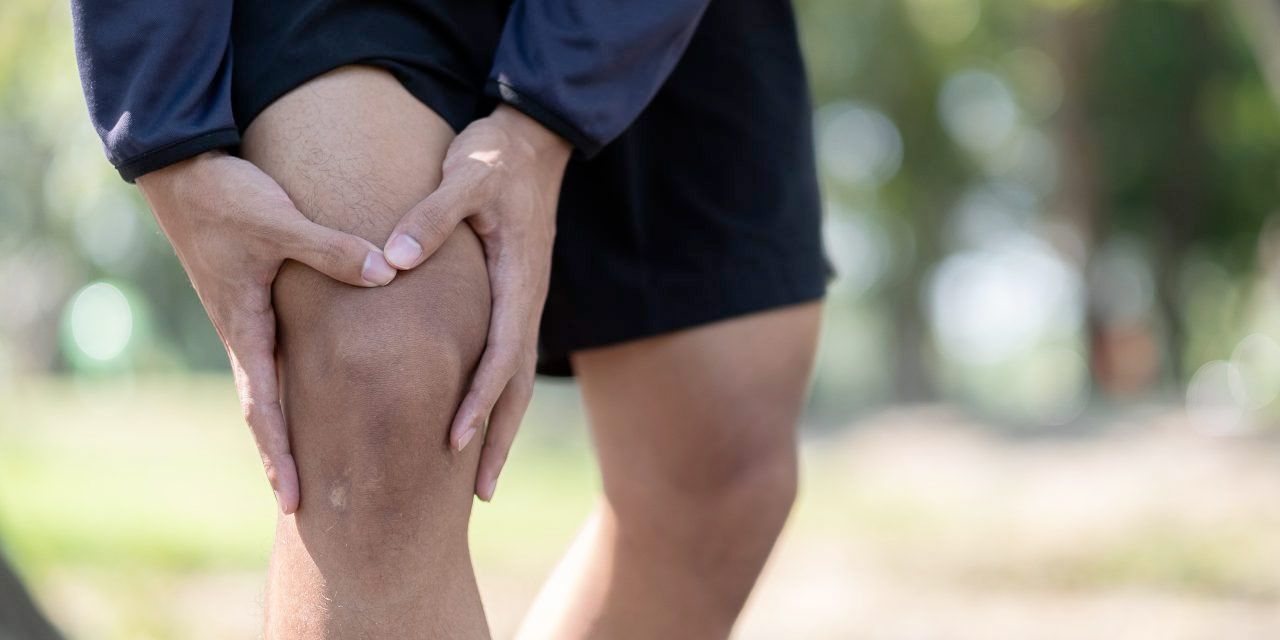
Patellofemoral pain, aka runner’s knee, causes pain on the front of the knee under the kneecap (patella). It affects up to 1 in 6 ultra runners (and around 1 in 14 non-ultra runners).

The biggest risk for triggering or aggravating patellofemoral pain is vert! Hills put a lot of pressure on the knee so suddenly ramping up your vert can create a cycle of pain and sensitivity. You can also trigger patellofemoral pain by running with excessive muscle fatigue. The loss of good hip and ankle control leads to overload of small areas of joint cartilage.

Training sessions can be modified to flatter terrain – you’ll need to compromise your vertical so make sure you add in some specific strength training to cover climbing and descending.

You can often improve your running technique by running a little faster than normal or by choosing technical single track over fire trails. Just remember though, if muscle fatigue was part of the cause, taking on more challenging runs needs to be offset with shorter duration sessions or regular walk breaks.

Plantarfasciitis

Plantarfasciitis affects up to 1 in 10 runners every year and can be a persistent and stubborn issue lasting months. It has a number of potential causes and each treatment approach tends to only be effective for its targeted cause.

The same can be said for training modifications – each modification focuses on mitigating an underlying cause as well as reducing aggravation of the condition itself. If you try any of these mods and they’re not working for you after a week, ditch it and try a different variation or approach.

Knowing if you’ve chosen the right session is made even more difficult by the fact that plantarfasciitis often warms up and the pain eases during a run. You won’t know if you’re on the right track until hours later. So the advice here is to try one approach below for a full week, then re-evaluate the condition based on how long it takes to warm up in the morning. If you can walk ‘normally’ within 20 minutes, and next week it only takes 10 minutes to walk normally, you’re on the right track.

Possible training mods:

  • Choose firm ground over soft ground (eg. grass or loose trail),
  • Avoid fast or slow running (ie. stick to a mid-pace cruising speed),
  • Choose stairs over hills, and
  • Wear your newest and/or well-structured shoes instead of old, worn and/or overly soft shoes.


Shin Splints

This one can get a little tricky as ‘shin splints’ actually describes a number of different conditions that can cause shin pain. It affects up to 1 in 5 runners each year and includes injuries such as bone stress, tibial periostitis and compartment syndrome (you can read more about the difference between conditions and how to determine which one you might have in this post).

Firstly, if your shin pain is coming from a tibial bone stress fracture (aka grade 4 bone stress injury), that’s a show stopper! You shouldn’t continue running to allow it to heal and recover – pushing on will only delay your recovery and can lead to some pretty major consequences. If you suspect a bone stress injury, get it assessed by a professional as soon as you can – early intervention = early recovery.

For most other forms of shin splints, the injury worsens with longer durations of running and greater impact forces. Both of these can be successfully mitigated to allow for decent training volumes and injury recovery.

For training duration, the issue relates to accrued muscle fatigue which increases the pressure on muscles and bone. Obviously as an ultra runner, the thought of a 3km training session doesn’t quite cut it. But you can avoid the build-up of fatigue and still run long with regular easy walk breaks. You might try a 2hr session with 10min run to 2min walk – that still gives you 1h40min of running while reducing the build-up of fatigue and overload.

To reduce impact forces, you should avoid fast running and steep downhills. It’s worth mentioning that very slow running also has greater impact forces, so try to stick to your cruising pace. As an alternative, you can use hiking poles to maintain speed and distance but with less impact loading. This is only advisable for those runners proficient with poles and/or those who intend to race with poles.


By Kate Dzienis March 23, 2026
Herdy's Frontyard Ultra, WA Gold Coast Backyard Ultra, Qld I'm Still Standing Sydney, NSW Trail Run Australia - Tathra, NSW Sri Chinmoy 48hr Track Ultra (Australian 48hr Track Championships, ACT Washpool World Heritage Trails, NSW Tamworth Trailblazer, NSW Upcoming Events WEEKLY NEWS REPORT FOR 23-3-2026 As always, we're continuously on the hunt for your stories and reports, so get those race reports and photographs in to ultramag@autra.asn.au with the following information: Word document, single spaced Include the name of the event, the date and the location anywhere in the report (just a bullet point at the top is great) Please attach photographs to the email – do not put images in the body of your Word doc. You’ll just get me emailing you back asking for the photos sent in the correct way! As many photos as possible. With our new website, it’s now easier than ever to include a nice gallery in each race report No PDFs please And remember, it doesn’t have to be about an AUTRA-listed event specifically! You just have to be an AUTRA member for the 2026 year. Also too, if you’ve run in a non-AUTRA listed event anywhere on home soil or internationally, we’d love to include your race results and experience in our Member Updates, so please do reach out to us via email to kate.dzienis@autra.asn.au If any corrections need to be made in any of the results listed below, please alert me via email.
By Dave Martin March 14, 2026
AUTRA’s Annual General Meeting (AGM) will be held on Wednesday 15 April 2026
March 12, 2026
AUTRA has been in direct contact with the organisers of the Snowies Trail Run Festival, In2Adventure, regarding a recent situation involving an athlete and the event’s in‑person safety briefing requirements. In2Adventure has confirmed that the situation was discussed directly with the athlete at the time.​ From In2Adventure’s account, and for the purpose of clarifying the public record, AUTRA notes the following points:​ At no stage was the athlete prevented from breastfeeding at the event.​ The organiser states that the following options were offered to enable the athlete to participate while still meeting safety requirements: a quiet and private space where she could breastfeed while still being present at the briefing; the option to receive the required briefing at the 30 km start line after the start; and the option to change her registration to the 21 km event, where the briefing is conducted on the start line.​ At no stage prior to event registration on Saturday night did the athlete contact the organiser to advise of her situation or request alternative arrangements, which limited what could be put in place at the time.​ Face‑to‑face safety briefings have always been a requirement for In2Adventure events due to the remote and higher‑risk nature of the trails. AUTRA was aware that in‑person briefings were used and had not raised concerns about that general approach. The organiser has indicated that this requirement is driven by safety, duty‑of‑care and insurance obligations, and follows previous experience where remote or online briefings resulted in athletes starting events without critical safety information.​ The organiser maintains that the event was not conducted in a manner that was intended to be non‑inclusive, inflexible or discriminatory, and that decisions made on the day were based solely on safety requirements that apply equally to all participants.​ AUTRA’s aim in issuing this statement is solely to clarify the context and ensure that the public record reflects the information provided to us by the organiser.
By Kate Dzienis March 12, 2026
Results for 2026 Lark Hill Party Ultra, Belair Marathon, Mirrim Wurnit Back Paddock Ultra, and Coombabah Trail Run.
By Dave Martin March 2, 2026
Carrying that mandatory gear
LOAD MORE

share this

IN OTHER NEWS

By Kate Dzienis March 23, 2026
Herdy's Frontyard Ultra, WA Gold Coast Backyard Ultra, Qld I'm Still Standing Sydney, NSW Trail Run Australia - Tathra, NSW Sri Chinmoy 48hr Track Ultra (Australian 48hr Track Championships, ACT Washpool World Heritage Trails, NSW Tamworth Trailblazer, NSW Upcoming Events WEEKLY NEWS REPORT FOR 23-3-2026 As always, we're continuously on the hunt for your stories and reports, so get those race reports and photographs in to ultramag@autra.asn.au with the following information: Word document, single spaced Include the name of the event, the date and the location anywhere in the report (just a bullet point at the top is great) Please attach photographs to the email – do not put images in the body of your Word doc. You’ll just get me emailing you back asking for the photos sent in the correct way! As many photos as possible. With our new website, it’s now easier than ever to include a nice gallery in each race report No PDFs please And remember, it doesn’t have to be about an AUTRA-listed event specifically! You just have to be an AUTRA member for the 2026 year. Also too, if you’ve run in a non-AUTRA listed event anywhere on home soil or internationally, we’d love to include your race results and experience in our Member Updates, so please do reach out to us via email to kate.dzienis@autra.asn.au If any corrections need to be made in any of the results listed below, please alert me via email.
By Dave Martin March 14, 2026
AUTRA’s Annual General Meeting (AGM) will be held on Wednesday 15 April 2026
March 12, 2026
AUTRA has been in direct contact with the organisers of the Snowies Trail Run Festival, In2Adventure, regarding a recent situation involving an athlete and the event’s in‑person safety briefing requirements. In2Adventure has confirmed that the situation was discussed directly with the athlete at the time.​ From In2Adventure’s account, and for the purpose of clarifying the public record, AUTRA notes the following points:​ At no stage was the athlete prevented from breastfeeding at the event.​ The organiser states that the following options were offered to enable the athlete to participate while still meeting safety requirements: a quiet and private space where she could breastfeed while still being present at the briefing; the option to receive the required briefing at the 30 km start line after the start; and the option to change her registration to the 21 km event, where the briefing is conducted on the start line.​ At no stage prior to event registration on Saturday night did the athlete contact the organiser to advise of her situation or request alternative arrangements, which limited what could be put in place at the time.​ Face‑to‑face safety briefings have always been a requirement for In2Adventure events due to the remote and higher‑risk nature of the trails. AUTRA was aware that in‑person briefings were used and had not raised concerns about that general approach. The organiser has indicated that this requirement is driven by safety, duty‑of‑care and insurance obligations, and follows previous experience where remote or online briefings resulted in athletes starting events without critical safety information.​ The organiser maintains that the event was not conducted in a manner that was intended to be non‑inclusive, inflexible or discriminatory, and that decisions made on the day were based solely on safety requirements that apply equally to all participants.​ AUTRA’s aim in issuing this statement is solely to clarify the context and ensure that the public record reflects the information provided to us by the organiser.
ALL NEWS