




COACH’S CORNER - The Question of Poles by Ash Daniels
should you run with poles on your next ultra? if you haven't used them before, should you learn how? ash daniels gives all the advice you need.
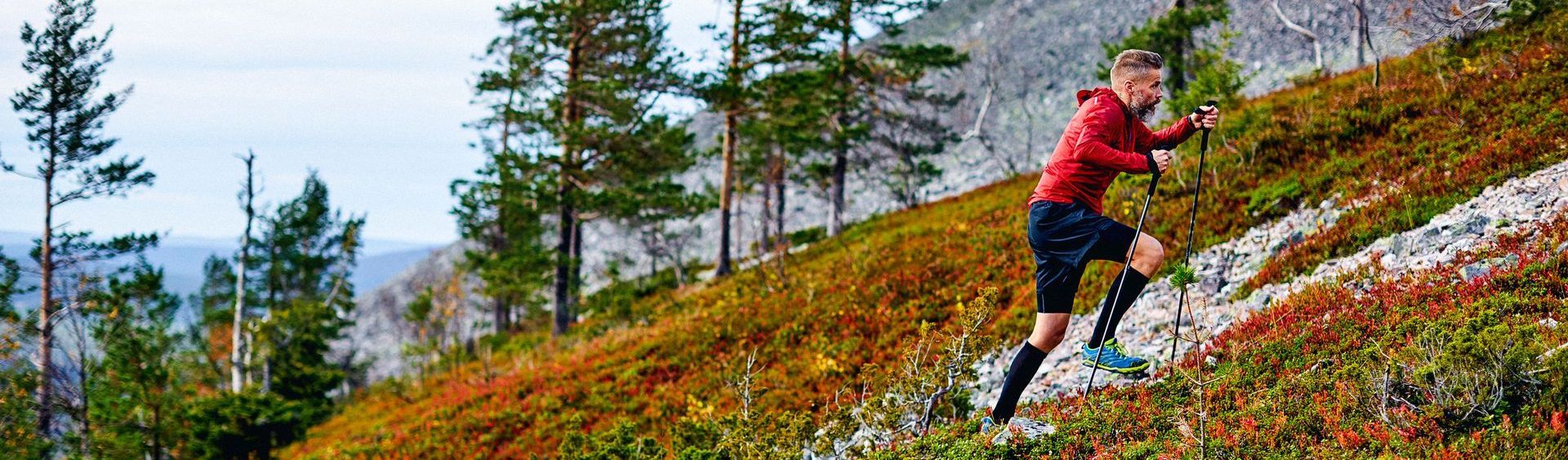
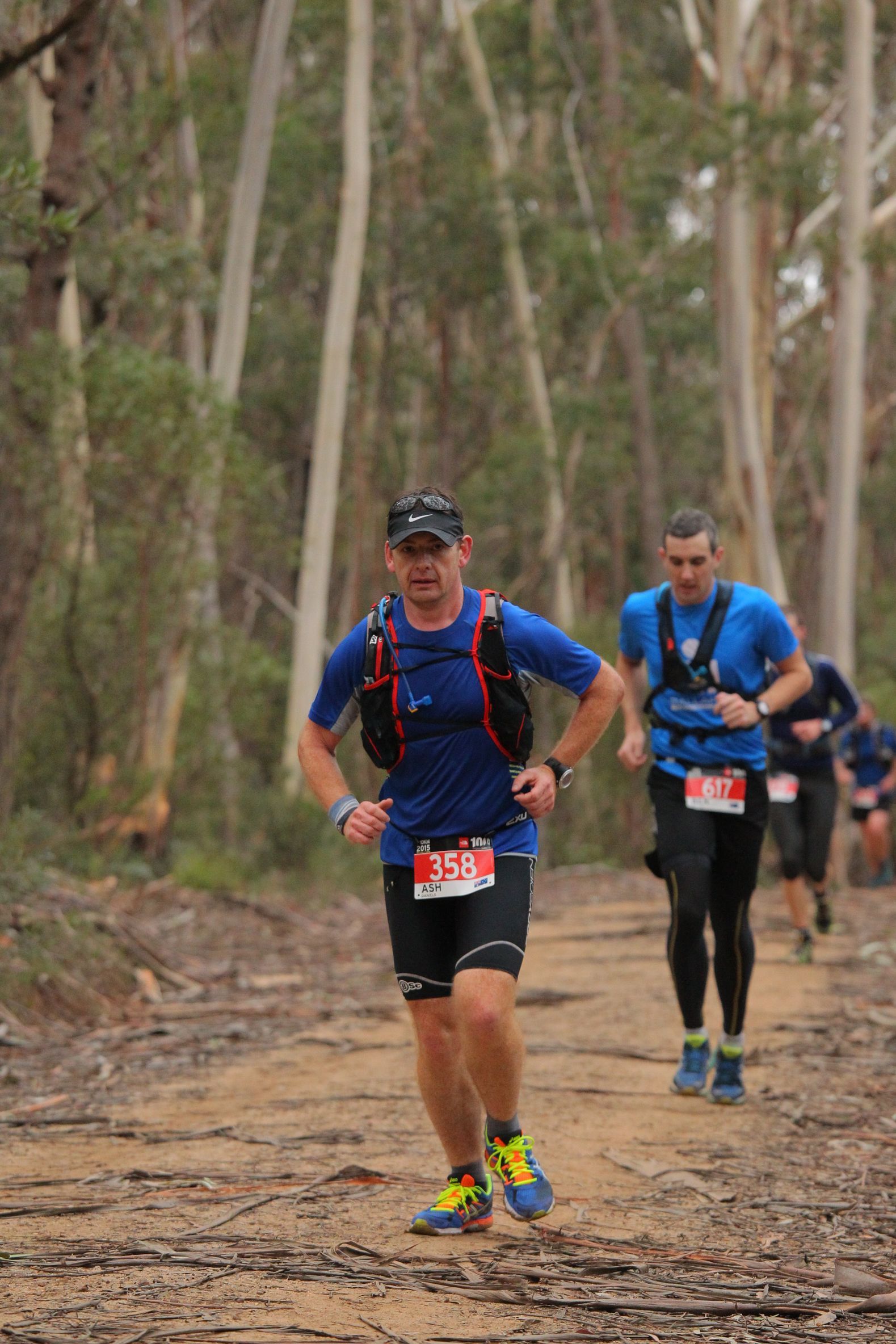
Ultra marathons and trail running are challenging and require significant endurance, especially when you are running a hilly or mountainous course (think UTA, GSER or Buffalo). Running poles are an essential tool for many ultra and trail runners, helping them maintain balance and stability, reduce fatigue, and increase overall speed.
However, using them can be tricky and many people don’t know how to use them to their full potential and only potentially think about them, a week or two from race day.
Benefits of Running with Poles the Scientific View
In the world of trail and ultra running, the debate over whether a pair of poles can truly enhance your performance while climbing steep mountains has raged on for years. Recently, an Italian mountain runner, coach, and sports science professor, along with his team, conducted a groundbreaking study to settle this ongoing discussion. Their work is of significant interest to us runners.
The research involved a custom treadmill capable of inclines up to a jaw-dropping 45 degrees – the steepest in the world – equipped with an extra-wide belt that allowed subjects to use poles. The key question was whether these poles saved energy and improved climbing speed.
Previous studies suggested that using trail running poles increases energy expenditure by about 20 percent but enables you to walk faster with a longer stride, and in some cases, reduces your perception of effort, primarily on level surfaces. However, this new research aimed to determine their impact specifically on the uphills.
The latest study, published in the European Journal of Applied Physiology, examined whether poles ‘saved the legs’ during steep ascents. Interestingly, previous experiments had found that poles either saved no energy on uphills or only a marginal amount. However, the subjects were 2.5 per cent faster with poles on inclines of just under 20 degrees.
The researchers conducted tests with 15 participants both on the custom treadmill and on outdoor mountain terrain. The runners wore portable VO2 analysers to measure their aerobic efforts. Force-sensitive poles and insoles measured the forces exerted by the runners’ arms and legs.
The results revealed that as the incline steepened, the reliance on poles increased significantly. The harder the subjects used their poles, the more their leg force reduction increased, highlighting the importance of actively engaging with the poles.
The most valuable data came from the outdoor tests, where terrain irregularities made it more challenging to coordinate arm and leg movements. Despite this, the study still demonstrated that using poles reduced insole-measured leg forces by about 5 per cent during all-out outdoor hill sessions, while subjects were 2.5 per cent faster when using the poles.
In essence, the study’s findings suggest that trekking poles help you go uphill faster, not by saving energy but by redistributing some of the load from your legs to your arms. This revelation challenges the common belief that trail runners should travel as lightly as possible. In mountain trail running, European runners, who are more willing to use poles, often outperform North American runners, who tend to be more hesitant in adopting this equipment.
Of course, when it comes to trail running, the terrain isn’t always steep uphill. The benefits are less clear on level, undulating, or downhill trails, where you need to consider trade-offs between the weight of the poles and their portability. However, if you're tackling a trail with a long, steep ascent, this study makes a compelling case for bringing your trekking poles!
Choosing the Right Running Poles for You
The first step to making the most out of your running poles is choosing the right pair. There are many types of running poles available in the market, and which ones you pick, depends on your personal preferences and the terrain you’ll be running on. Generally, lightweight and collapsible poles are best for ultra running, as they can be easily carried in a pack and won’t weigh you down, other considerations are size, grip and whether you want a collapsible pair.
Running poles come in varying sizes and you need to ensure you have selected the right size. A simple exercise of using a brush or broom, and the elbow at right angles will give a good indication of the correct running pole height you need.
There are now also some different options for the grip. Some vendors have a detachable grip where the runner wears a glove-type option that can detached easily from the pole. Alternatively, there is the traditional loop grip, the same as the better-known ski pole.
Master the Technique - How to use your poles
Technique - Running with poles requires a different technique than running without them. You’ll need to learn how to plant the poles correctly and how to use them to propel yourself forward. One of the most common techniques is the double-pole plant, where both poles are planted at the same time, and you push off with them to move forward. Double poling is generally better on steeper ground.
Another technique is the single-pole plant, where you plant one pole at a time and use it to push off, very simply using the same as we walk. All require practice on similar terrain as to what you will be racing. Keep in mind the three phases you will go through, pull, push and swing.
Don’t leave the decision to use poles till race week. Training with them as part of your long run, or regular specific sessions to practice, will make a big difference on race day.
Top Tip - For poles with the standard strap, push your hand up through the strap and pull down. The strap should go around the back of your hand, and return up the palm of your hand between your thumb and forefinger.
Final Thoughts - Practice, Practice and Practice
The key to mastering poles for ultras is practice:
· Practice packing and unpacking them from your kit or quiver whilst moving
· Practice eating and drinking with them
· Practice with them well before race day on the type of terrain you will race on
ASH daniels is a level 3 athletics australia performance development coach at journey 2 ultra coaching in Sydney, nsw. if you would like more information on being trained by ash, click through here to our aura endorsed coaches page.



share this
IN OTHER NEWS
