

COACH'S CORNER - Sore Knees? Do you need rest?

COACH'S CORNER - Sore Knees? Do you need rest?

Pete Colagiuri - Sports Physiotherapist & Co-Founder Bioathletic • November 25, 2023

 MY KNEES ARE GETTING SORE AFTER TRAINING. DO I NEED TO REST?

QUESTION:

I’ve been upping my weekly kms and adding more vert. But my knees are getting noticeably sore after bigger sessions. Is it time for a rest? Do I need time off?


RESPONSE:

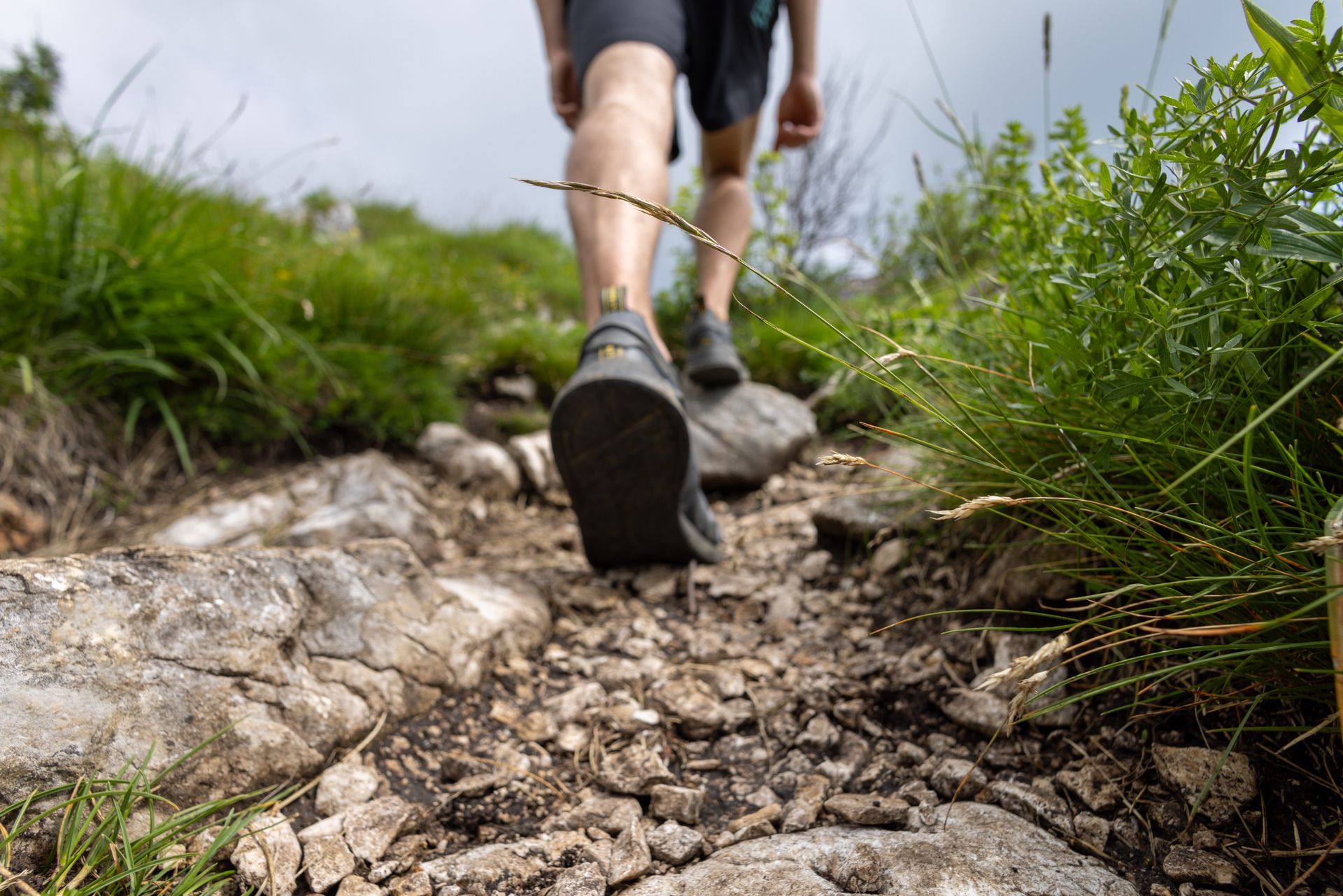
Knee pain is one of the most common complaints in trail and ultra running. It puts the runner in a tricky position - you can't back off every time your knees get sore but you can't ignore it either. 


So what's the plan?

The first thing to understand is the difference between “rest” and “recovery”. After you've done a hard session, the body needs time to rebuild itself so that you benefit from the session. A lack of recovery time just leads to a gradual breakdown of key structures and injury, like bone stress fractures. "Recovery" is a period of rest to give time for the body to rebuild itself. The body is getting stronger and more resilient, ready for the next session.

After a few days, the body has completed its rebuilding phase and is no longer "recovering". After a week or so, we've moved into the "prolonged rest" phase. With the body constantly adapting to its current situation, it begins to reduce muscle and other aspects that contribute to fitness and performance. The longer the rest phase, the more pronounced the effect.

Unlike the initial recovery period after training, when the body was rebuilding itself, a prolonged rest phase results in the body becoming less resilient and less adapted to running. 

Which brings us back to the original question and knee pain.

Your knees are sore due to a spike in cartilage pressure and connective tissue loading with more hills/stairs and time on feet. Taking a few days for recovery reduces the symptoms and irritation, almost like a quick reset. It may not get rid of the pain completely but it should help by giving time for the acute inflammatory phase to pass (around 48-72 hours).

Sometimes that solves the issue as the body becomes more resilient to future loading. But if the pain comes back as you return to training, runners will often think that it may just need more recovery time to overcome the problem. And this is where too much of a good thing flips the script and starts to create a downward spiral.

An extended rest period causes a loss of strength, a loss of tendon elasticity and increased joint stiffness. So your return from injury becomes harder as you become less adapted to running. 

The take home message here is to schedule in some recovery days, even take an extra recovery day or two if you're managing soreness. But pushing days into weeks is counterproductive and not an effective way of managing injuries. As always, getting professional advice should get you through the injury recovery phase quicker and with less missteps.


By Dave Martin March 14, 2026
AUTRA’s Annual General Meeting (AGM) will be held on Wednesday 15 April 2026
March 12, 2026
AUTRA has been in direct contact with the organisers of the Snowies Trail Run Festival, In2Adventure, regarding a recent situation involving an athlete and the event’s in‑person safety briefing requirements. In2Adventure has confirmed that the situation was discussed directly with the athlete at the time.​ From In2Adventure’s account, and for the purpose of clarifying the public record, AUTRA notes the following points:​ At no stage was the athlete prevented from breastfeeding at the event.​ The organiser states that the following options were offered to enable the athlete to participate while still meeting safety requirements: a quiet and private space where she could breastfeed while still being present at the briefing; the option to receive the required briefing at the 30 km start line after the start; and the option to change her registration to the 21 km event, where the briefing is conducted on the start line.​ At no stage prior to event registration on Saturday night did the athlete contact the organiser to advise of her situation or request alternative arrangements, which limited what could be put in place at the time.​ Face‑to‑face safety briefings have always been a requirement for In2Adventure events due to the remote and higher‑risk nature of the trails. AUTRA was aware that in‑person briefings were used and had not raised concerns about that general approach. The organiser has indicated that this requirement is driven by safety, duty‑of‑care and insurance obligations, and follows previous experience where remote or online briefings resulted in athletes starting events without critical safety information.​ The organiser maintains that the event was not conducted in a manner that was intended to be non‑inclusive, inflexible or discriminatory, and that decisions made on the day were based solely on safety requirements that apply equally to all participants.​ AUTRA’s aim in issuing this statement is solely to clarify the context and ensure that the public record reflects the information provided to us by the organiser.
By Kate Dzienis March 12, 2026
Results for 2026 Lark Hill Party Ultra, Belair Marathon, Mirrim Wurnit Back Paddock Ultra, and Coombabah Trail Run.
By Dave Martin March 2, 2026
Carrying that mandatory gear
March 1, 2026
James Sieber explains how a training plan only works when it matches the person.
LOAD MORE

share this

IN OTHER NEWS

By Dave Martin March 14, 2026
AUTRA’s Annual General Meeting (AGM) will be held on Wednesday 15 April 2026
March 12, 2026
AUTRA has been in direct contact with the organisers of the Snowies Trail Run Festival, In2Adventure, regarding a recent situation involving an athlete and the event’s in‑person safety briefing requirements. In2Adventure has confirmed that the situation was discussed directly with the athlete at the time.​ From In2Adventure’s account, and for the purpose of clarifying the public record, AUTRA notes the following points:​ At no stage was the athlete prevented from breastfeeding at the event.​ The organiser states that the following options were offered to enable the athlete to participate while still meeting safety requirements: a quiet and private space where she could breastfeed while still being present at the briefing; the option to receive the required briefing at the 30 km start line after the start; and the option to change her registration to the 21 km event, where the briefing is conducted on the start line.​ At no stage prior to event registration on Saturday night did the athlete contact the organiser to advise of her situation or request alternative arrangements, which limited what could be put in place at the time.​ Face‑to‑face safety briefings have always been a requirement for In2Adventure events due to the remote and higher‑risk nature of the trails. AUTRA was aware that in‑person briefings were used and had not raised concerns about that general approach. The organiser has indicated that this requirement is driven by safety, duty‑of‑care and insurance obligations, and follows previous experience where remote or online briefings resulted in athletes starting events without critical safety information.​ The organiser maintains that the event was not conducted in a manner that was intended to be non‑inclusive, inflexible or discriminatory, and that decisions made on the day were based solely on safety requirements that apply equally to all participants.​ AUTRA’s aim in issuing this statement is solely to clarify the context and ensure that the public record reflects the information provided to us by the organiser.
By Kate Dzienis March 12, 2026
Results for 2026 Lark Hill Party Ultra, Belair Marathon, Mirrim Wurnit Back Paddock Ultra, and Coombabah Trail Run.
ALL NEWS