

COACH’S CORNER - Protein Powders by Lisa Sherman

COACH’S CORNER - Protein Powders by Lisa Sherman

August 30, 2024

protein powders are now more popular than ever. lisa sherman takes you through the ins and outs of how to choose the right one.

There is no denying the popularity of protein powders amongst runners. Most of us are aware of the role of protein in facilitating muscle growth and repair, and that the daily requirements for protein are increased for those that exercise regularly, to both optimise performance and promote recovery. Compared to the current Recommended Daily Intake of 0.8g/kg/day (1) which is aimed at preventing deficiency, athletes are recommended to consume in the range of 1.4g-2.0g/kg/day of quality protein, to improve both performance and achieve adaptations to training (2).

Ideally, our protein needs should be met by spreading intake throughout the day, including a serve of protein rich foods with every main meal and snack, in the range of 15-30g of protein at each meal or snack (3).

Fortunately, there is a wide variety of protein rich foods from both animal and plant-based foods available, which helps facilitate a ‘food first’ approach for most athletes to meet their target dietary intake and supporting their individual dietary preferences. Many of us will however turn to protein supplementation to help meet these needs, either on a regular basis or at specific times, such as post a long run. This can be for convenience and simplicity to meet protein and energy requirements, or perhaps due to time constraints where we are unable to access quality food sources so a protein supplement is a good substitute.

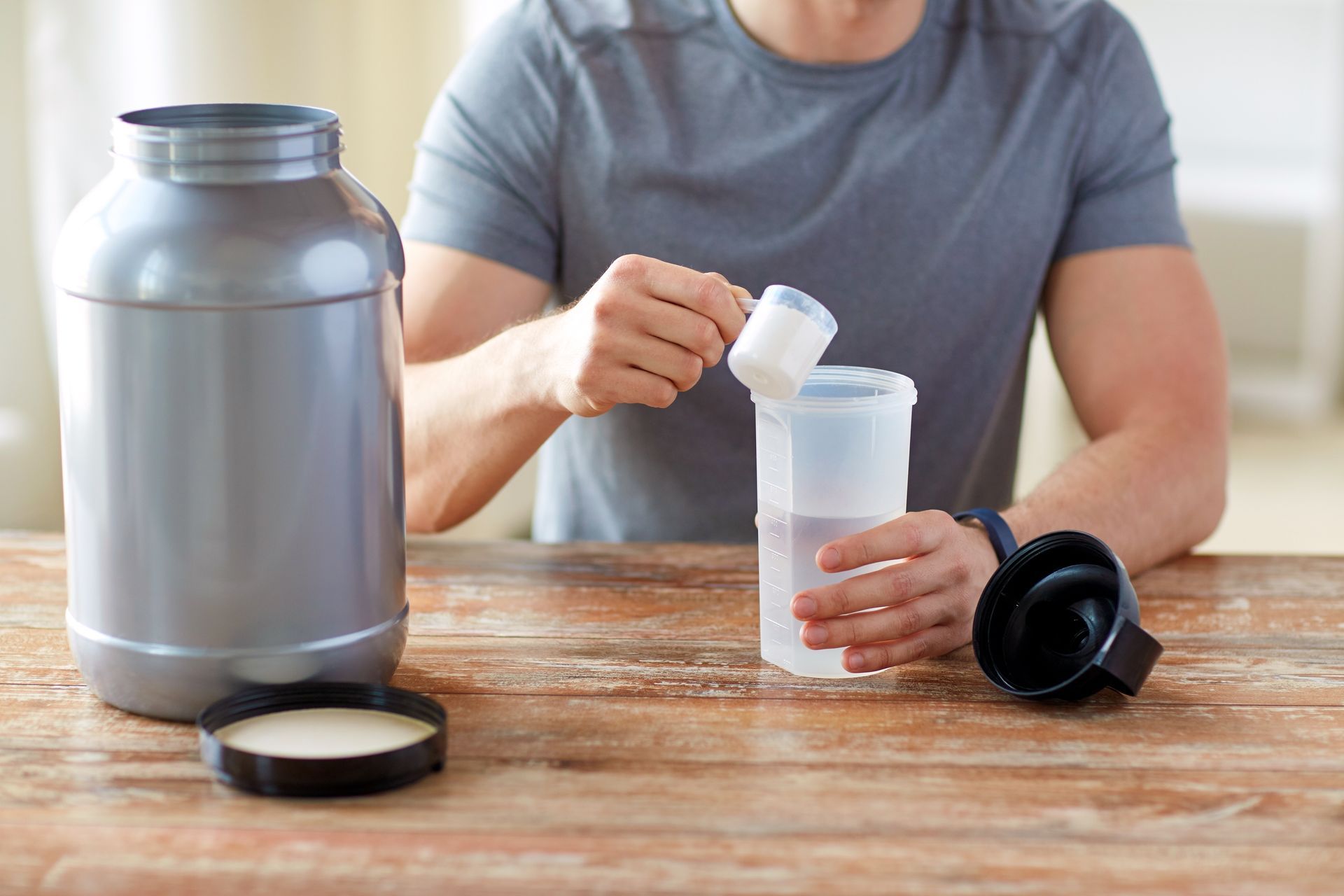
Consuming a protein powder mixed with some water or coconut water in the car on way home from a long trail run comes to mind. Or perhaps we need to boost the protein content of a meal, so we add some protein powder to a smoothie for example. Whatever the reason we choose to use a protein supplement, it is important that we consider the quality of the supplement and chose the one that is most beneficial for us as an individual.

There has been a staggering increase in recent years in the number of protein supplements, especially protein powders, available on the market. There are a huge number of brands and types of protein, a wide range of health claims and benefits, not to mention endorsements across social media platforms. In addition, many have added ingredients, different flavours or texture, and the cost varies greatly. So how do we choose a quality protein powder?

There are two main considerations when choosing a protein powder – bioavailability and the amino acid profile.

Bioavailability refers to the ability of the substance, in this case protein, to be absorbed and used by the body. The higher the bioavailability, the easier it is for the body to digest, absorb and utilise the amino acids (that make up the protein). In general, animal-based proteins, especially whey and casein (both dairy) and eggs are considered to have a high biological value as they contain high amounts of all the essential amino acids (these are the ones that we need to supply to the body as we are unable to make them ourselves). Soy is a plant-based protein that is also considered to have a higher biological value than other plant-based proteins (pea, rice, hemp, potato), however combining different plant-based proteins can help improve the bioavailability.

There are also various forms such as whey concentrate or isolate, with isolate typically having a higher protein content, and more rapidly absorbed.

Amino acid profile refers to the total amino acid content of each of the essential and non-essential amino acids contained within the product. Ideally, when considering a protein powder, we are looking for a balance of the essential amino acids and a leucine content of 2-3g/serve, as this branch chain amino acid is primarily responsible for muscle protein synthesis, important for recovery and adaptation following exercise.

But there are some other factors to consider as well, especially texture, taste, and other ingredients. Some protein powders can have a chalky or grainy texture which may not be very pleasant. Likewise, the taste or flavour of the protein powder contributes greatly to the palatability, and if we are not a fan of either the texture or taste, our desire to consume the supplement will be diminished and we may not be very compliant, no matter how much we know we will benefit from having it.

We also need to be especially mindful of other ingredients in the protein powder. Many will contain added sugars, artificial flavourings, emulsifiers and thickeners, additives, as well as other vitamins and minerals. Whilst some of these may be beneficial such as a protein powder that has added vitamin C or iron to help support our immune system post exercise, a protein powder that has a lot of added sugars is not. In some products, the protein supplement includes a higher carbohydrate and/or fat content and is more like a meal replacement and may or may not fit with your dietary requirements.

Where possible, we should always look to a ‘food first’ approach for our nutrients, however protein powders are a dietary supplement that can provide health and performance benefits for some individuals. Choose one that has minimal ingredients, has a high bioavailability, declares all ingredients on the nutrition label, especially the amino acid profile, and that you enjoy the taste and texture of. As ultimately, there is no benefit to be gained from the supplement if you really don’t want to consume it and it sits in the pantry.


References

Nutrient Reference Values, Protein https://www.eatforhealth.gov.au/nutrient-reference-values/nutrients/protein
Jager R, Kersick CM, Campbell BI, Cribb, PJ (2017). International Society of Sports Nutrition Position Stand: protein and exercise. J Int Soc Sports Nutr. 2017; 14:20 DOI
10.1186/s12970-017-0177-8
AIS Sports Supplement Framework, Isolated Protein Supplements
https://www.ais.gov.au/__data/assets/pdf_file/0003/1000488/Sport-supplement-fact-sheets-Isolated-protein-supplement-v3.pdf

LISA SHERMAN IS A QUALIFIED NUTRITIONIST, ULTRA RUNNER AND RECREATIONAL RUNNING COACH, WITH A PASSION FOR HELPING WOMEN TRAIN FOR THEIR FIRST MARATHON OR ULTRA MARATHON AND TRAIL RACES IN NSW. 


iF YOU WOULD LIKE MORE INFORMATION ON BEING TRAINED BY LISA, CLICK THROUGH HERE TO OUR AURA ENDORSED COACHES PAGE.

By Kate Dzienis March 23, 2026
Herdy's Frontyard Ultra, WA Gold Coast Backyard Ultra, Qld I'm Still Standing Sydney, NSW Trail Run Australia - Tathra, NSW Sri Chinmoy 48hr Track Ultra (Australian 48hr Track Championships, ACT Washpool World Heritage Trails, NSW Tamworth Trailblazer, NSW Upcoming Events WEEKLY NEWS REPORT FOR 23-3-2026 As always, we're continuously on the hunt for your stories and reports, so get those race reports and photographs in to ultramag@autra.asn.au with the following information: Word document, single spaced Include the name of the event, the date and the location anywhere in the report (just a bullet point at the top is great) Please attach photographs to the email – do not put images in the body of your Word doc. You’ll just get me emailing you back asking for the photos sent in the correct way! As many photos as possible. With our new website, it’s now easier than ever to include a nice gallery in each race report No PDFs please And remember, it doesn’t have to be about an AUTRA-listed event specifically! You just have to be an AUTRA member for the 2026 year. Also too, if you’ve run in a non-AUTRA listed event anywhere on home soil or internationally, we’d love to include your race results and experience in our Member Updates, so please do reach out to us via email to kate.dzienis@autra.asn.au If any corrections need to be made in any of the results listed below, please alert me via email.
By Dave Martin March 14, 2026
AUTRA’s Annual General Meeting (AGM) will be held on Wednesday 15 April 2026
March 12, 2026
AUTRA has been in direct contact with the organisers of the Snowies Trail Run Festival, In2Adventure, regarding a recent situation involving an athlete and the event’s in‑person safety briefing requirements. In2Adventure has confirmed that the situation was discussed directly with the athlete at the time.​ From In2Adventure’s account, and for the purpose of clarifying the public record, AUTRA notes the following points:​ At no stage was the athlete prevented from breastfeeding at the event.​ The organiser states that the following options were offered to enable the athlete to participate while still meeting safety requirements: a quiet and private space where she could breastfeed while still being present at the briefing; the option to receive the required briefing at the 30 km start line after the start; and the option to change her registration to the 21 km event, where the briefing is conducted on the start line.​ At no stage prior to event registration on Saturday night did the athlete contact the organiser to advise of her situation or request alternative arrangements, which limited what could be put in place at the time.​ Face‑to‑face safety briefings have always been a requirement for In2Adventure events due to the remote and higher‑risk nature of the trails. AUTRA was aware that in‑person briefings were used and had not raised concerns about that general approach. The organiser has indicated that this requirement is driven by safety, duty‑of‑care and insurance obligations, and follows previous experience where remote or online briefings resulted in athletes starting events without critical safety information.​ The organiser maintains that the event was not conducted in a manner that was intended to be non‑inclusive, inflexible or discriminatory, and that decisions made on the day were based solely on safety requirements that apply equally to all participants.​ AUTRA’s aim in issuing this statement is solely to clarify the context and ensure that the public record reflects the information provided to us by the organiser.
By Kate Dzienis March 12, 2026
Results for 2026 Lark Hill Party Ultra, Belair Marathon, Mirrim Wurnit Back Paddock Ultra, and Coombabah Trail Run.
By Dave Martin March 2, 2026
Carrying that mandatory gear
LOAD MORE

share this

IN OTHER NEWS

By Kate Dzienis March 23, 2026
Herdy's Frontyard Ultra, WA Gold Coast Backyard Ultra, Qld I'm Still Standing Sydney, NSW Trail Run Australia - Tathra, NSW Sri Chinmoy 48hr Track Ultra (Australian 48hr Track Championships, ACT Washpool World Heritage Trails, NSW Tamworth Trailblazer, NSW Upcoming Events WEEKLY NEWS REPORT FOR 23-3-2026 As always, we're continuously on the hunt for your stories and reports, so get those race reports and photographs in to ultramag@autra.asn.au with the following information: Word document, single spaced Include the name of the event, the date and the location anywhere in the report (just a bullet point at the top is great) Please attach photographs to the email – do not put images in the body of your Word doc. You’ll just get me emailing you back asking for the photos sent in the correct way! As many photos as possible. With our new website, it’s now easier than ever to include a nice gallery in each race report No PDFs please And remember, it doesn’t have to be about an AUTRA-listed event specifically! You just have to be an AUTRA member for the 2026 year. Also too, if you’ve run in a non-AUTRA listed event anywhere on home soil or internationally, we’d love to include your race results and experience in our Member Updates, so please do reach out to us via email to kate.dzienis@autra.asn.au If any corrections need to be made in any of the results listed below, please alert me via email.
By Dave Martin March 14, 2026
AUTRA’s Annual General Meeting (AGM) will be held on Wednesday 15 April 2026
March 12, 2026
AUTRA has been in direct contact with the organisers of the Snowies Trail Run Festival, In2Adventure, regarding a recent situation involving an athlete and the event’s in‑person safety briefing requirements. In2Adventure has confirmed that the situation was discussed directly with the athlete at the time.​ From In2Adventure’s account, and for the purpose of clarifying the public record, AUTRA notes the following points:​ At no stage was the athlete prevented from breastfeeding at the event.​ The organiser states that the following options were offered to enable the athlete to participate while still meeting safety requirements: a quiet and private space where she could breastfeed while still being present at the briefing; the option to receive the required briefing at the 30 km start line after the start; and the option to change her registration to the 21 km event, where the briefing is conducted on the start line.​ At no stage prior to event registration on Saturday night did the athlete contact the organiser to advise of her situation or request alternative arrangements, which limited what could be put in place at the time.​ Face‑to‑face safety briefings have always been a requirement for In2Adventure events due to the remote and higher‑risk nature of the trails. AUTRA was aware that in‑person briefings were used and had not raised concerns about that general approach. The organiser has indicated that this requirement is driven by safety, duty‑of‑care and insurance obligations, and follows previous experience where remote or online briefings resulted in athletes starting events without critical safety information.​ The organiser maintains that the event was not conducted in a manner that was intended to be non‑inclusive, inflexible or discriminatory, and that decisions made on the day were based solely on safety requirements that apply equally to all participants.​ AUTRA’s aim in issuing this statement is solely to clarify the context and ensure that the public record reflects the information provided to us by the organiser.
ALL NEWS